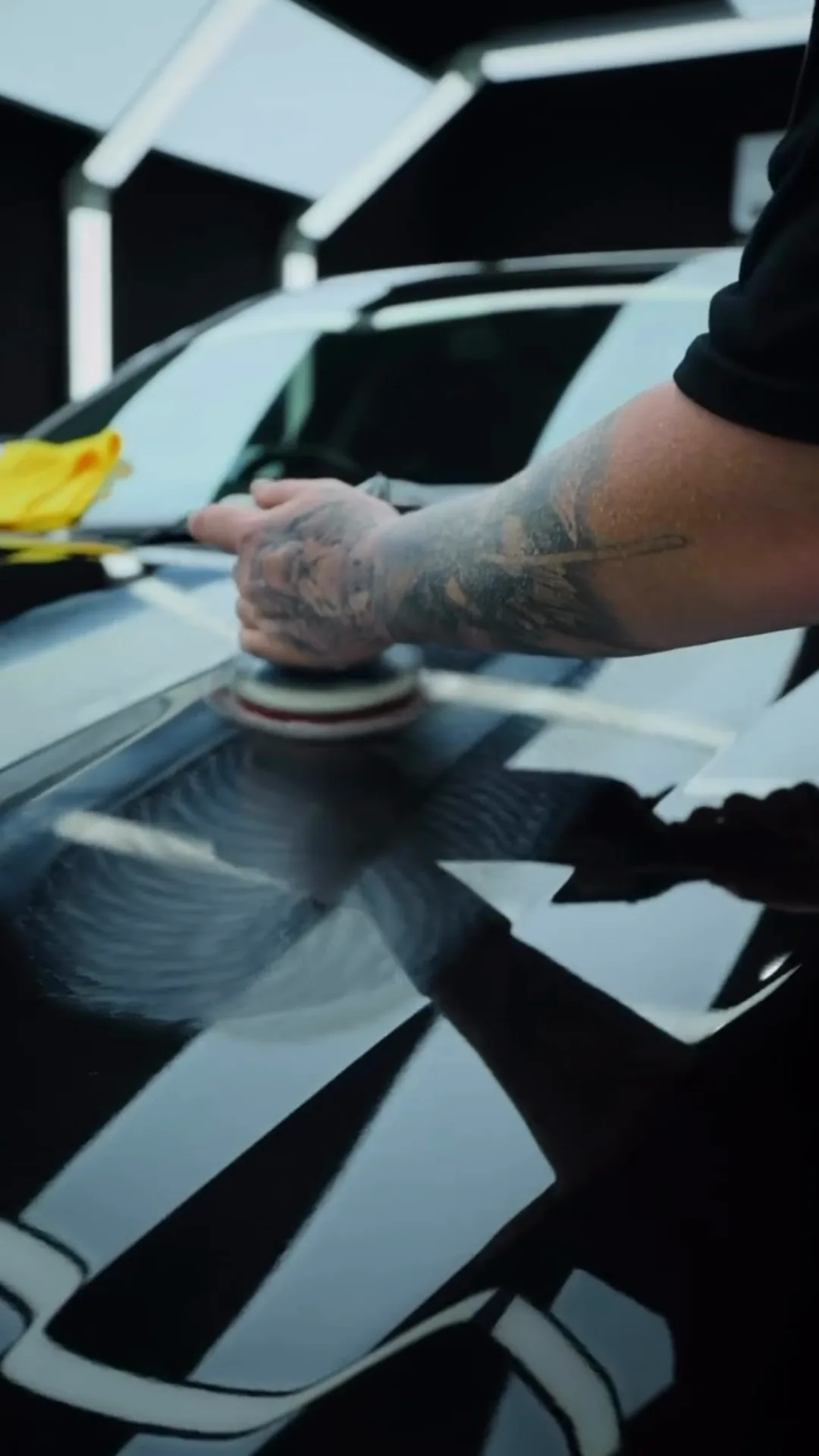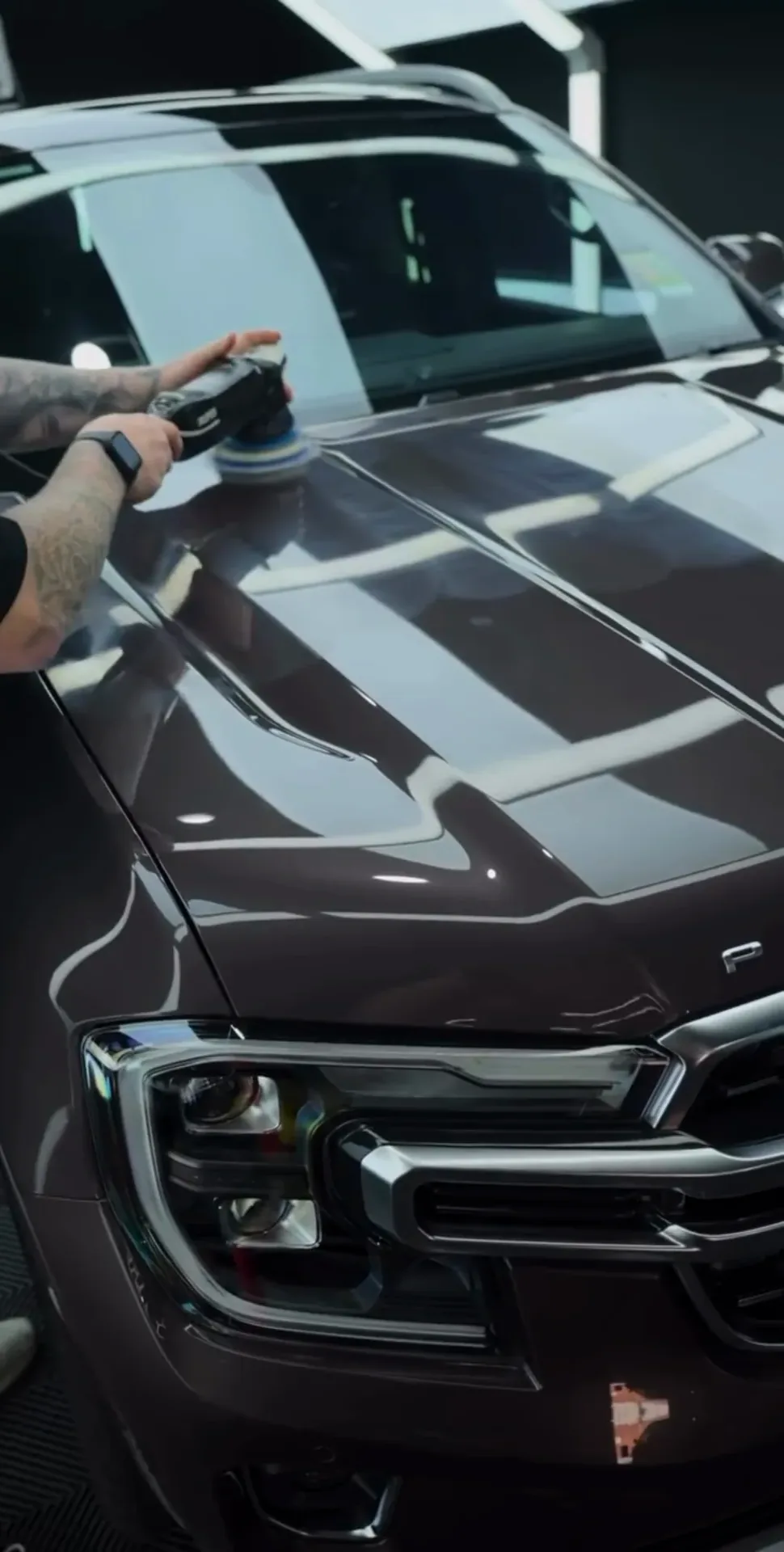
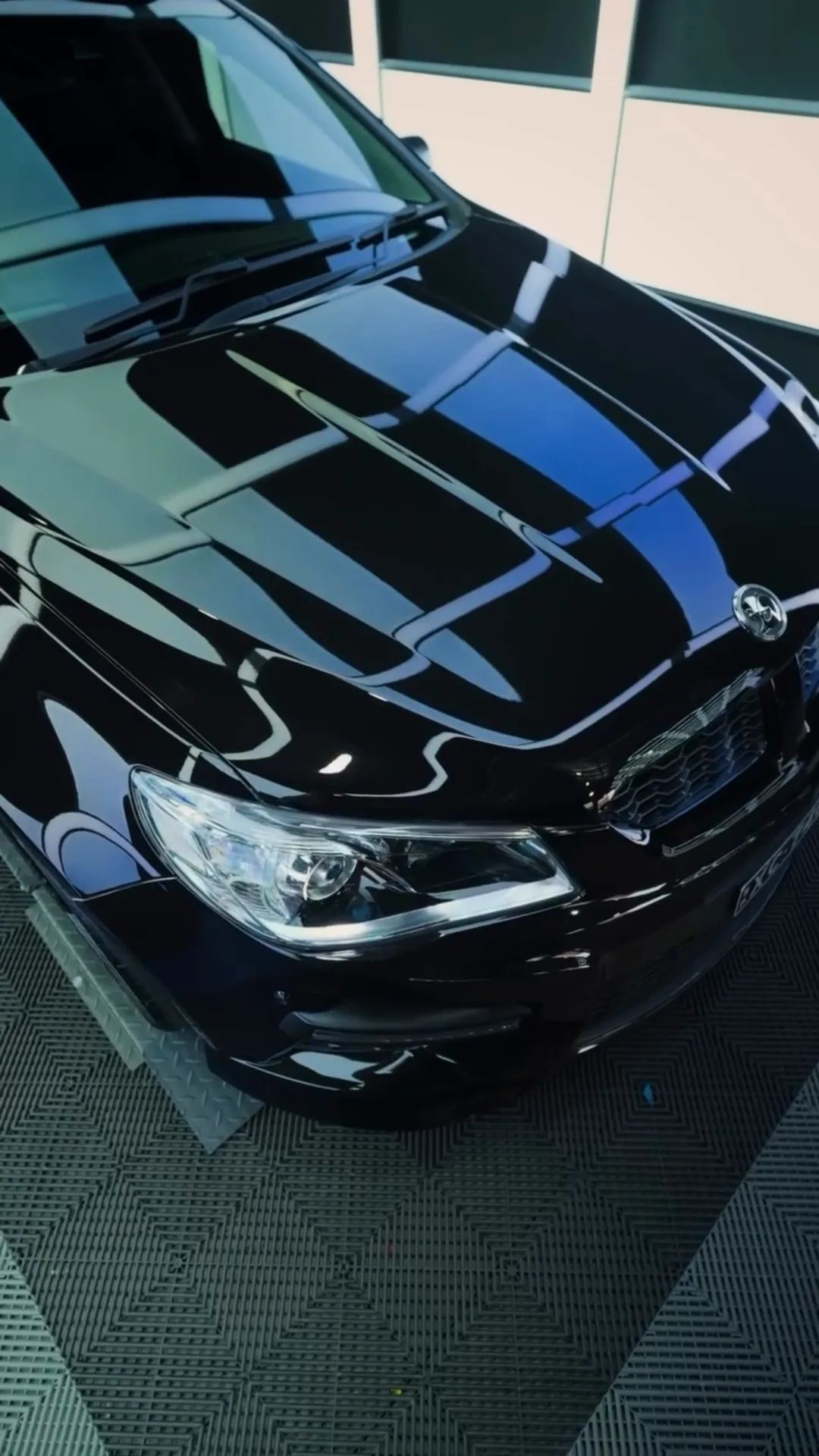
Does a new car need paint correction before ceramic coating? Only when the clean paint shows correctable defects and you want them improved. New paint does not automatically need machine polishing, and clear coat without defects should not be polished just because correction appears on a package list.
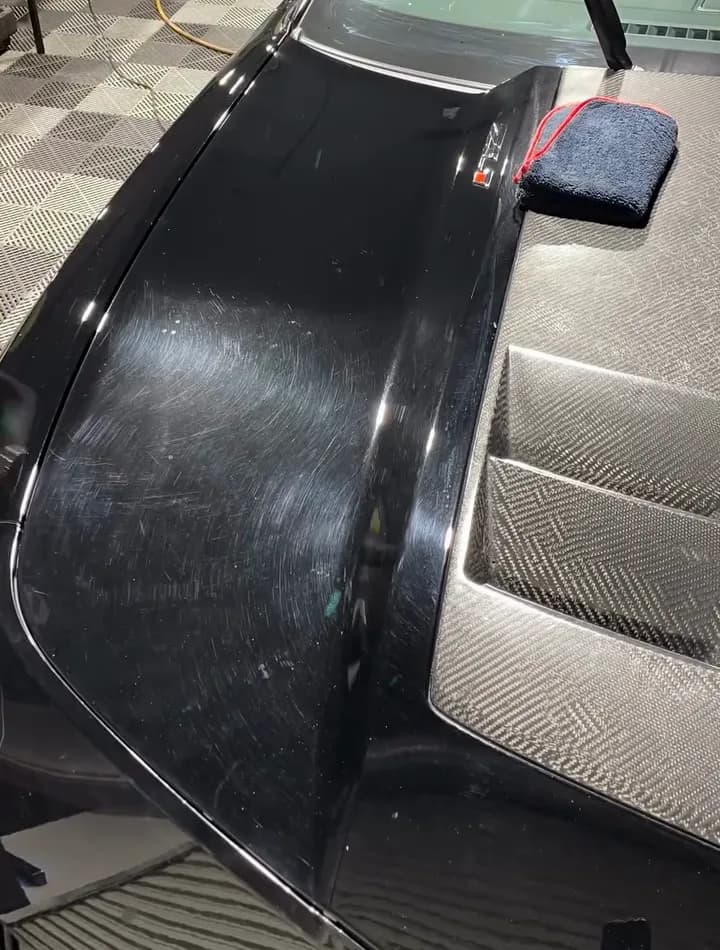
Some new cars do arrive with swirl marks, water spots, adhesive residue or haze from transport, storage and dealership washing. The answer should come from looking at the clean paint, not from assumption.
Hayden provides paint correction in Auckland as well as ceramic coating, at your home or workplace, so a new car can be cleaned, corrected if needed and coated by the same person.
Why a Brand-New Car Can Already Have Paint Defects
Before delivery, a car may be shipped, stored outdoors, unwrapped, washed and handled by several people. A rushed wash with dirty tools can add swirls, water can dry on the panels and adhesive residue can be left behind.
That does not mean every dealership causes damage or every new car is marked. Condition varies from car to car, which is why it is worth looking rather than assuming.
Dark colours show these marks most clearly, especially in strong New Zealand sun, so a new black or dark grey car is often where owners first notice them.
How to Check a New Car's Paint Yourself
Wait until the car is clean and dry, then check the darker panels in direct sun or under a bright torch. Look for fine circular scratches, hazy patches and water spot outlines, especially on the bonnet, roof and boot lid.
Then slip your hand into a thin plastic sandwich bag and run it lightly across a washed panel. Roughness you can feel through the bag usually means bonded contamination rather than a paint defect.
What Paint Correction Does Before a Coating
Machine polishing removes a small amount of clear coat to level fine swirls, haze and some water spot etching. It cannot remove stone chips, scratches through the clear coat or paint failure.
Because a coating is clear and long-lasting, any correction is done first. The coating then protects the improved finish; it does not do the correcting itself.
When Correction Is Unnecessary
Polishing a new car may be unnecessary when:
- the clean paint has no meaningful defects
- you are happy with how it looks
- the defects are too deep to correct safely
- keeping as much clear coat as possible matters more to you
- only contamination and residue need removing
Even without polishing, the paint still needs a thorough wash, decontamination and a final residue-free wipe before the coating goes on.
Does Ceramic Coating Hide Swirl Marks?
No. A coating may add gloss and make very fine marks a little less obvious in some light, but it does not level them, so swirls generally stay visible underneath.
Heavy polishing is not the only answer either. A light enhancement can often reach the result you want while removing less clear coat.
What Happens If You Coat Over Defects?
The coating locks them in. Swirls and water spots under a coating are still there, and removing them later means polishing through the coating and applying it again.
That is the main reason the decision about correction is made before the coating goes on rather than after.
What a New-Car Paint Inspection Should Include
A useful assessment usually involves:
- a safe wash and decontamination where needed
- a look at the paint in both direct and diffused light
- checks of edges, high points and any repainted areas
- identifying swirls, water spots, haze and deeper damage
- paint thickness readings where they are useful
- a test area if correction is being considered
- agreed expectations before any polishing starts
Ask for a clear separation between defects that can be improved and chips or damage that need repair. If you see obvious damage at delivery, raise it with the dealer before you take the car.
Can You Ask the Dealer Not to Wash the Car?
Many careful owners ask for minimal or no delivery washing. Whether the dealer can agree depends on its own process, so put the request in writing and confirm it close to delivery.
Skipping the dealership wash does not remove the need for proper preparation before coating. It simply means you control how the paint is first cleaned.
How Much Correction Should You Choose?
Choose the smallest level that gets a result you are happy with. A single-stage enhancement improves gloss and lighter marks, while multi-stage correction removes more defects but takes longer and removes more clear coat.
No one should promise a fixed percentage of defect removal without seeing the paint and testing it first.
What If the Dealer Is Repairing a Defect?
Find out whether the panel will be polished, touched up or repainted. Fresh paint may need the curing time the repairer advises before it can be coated, so plan the coating around that.
If a panel was repainted before delivery, mention it when you enquire so the preparation can allow for it.
What Correction and Coating Cost for a New Car
The Professional Ceramic Coating is advertised at a promotional $739. Paint correction is quoted for the car, and Hayden confirms the price before any work starts.
If your new car needs little or no correction, that is worth hearing before you pay for polishing the paint does not need.
Protecting the Finish Once It Is Right
Once the paint is where you want it, a coating keeps it easier to look after. Hermosa, which Hayden uses for every coating, was built specifically for New Zealand conditions, including strong UV exposure and coastal environments.
A coating does not stop stone chips, though. If those are your main concern, paint protection film is the product designed for impact.
If you have a new car arriving, request a quote with the make, model, delivery timing and your suburb. Hayden will come back to you to talk through the coating and any new-car paint correction it needs.